New shooters
Your first clay shooting lesson, start to finish
You don't need a gun, any experience, or the right clothes. Here's exactly what happens in your first hour with Ben Courtemarche — and honest answers to the questions almost every beginner asks before they call.
How the hour goes
Nothing is sprung on you. Every lesson follows the same unhurried order, because that order is what makes a first-timer safe, comfortable, and able to break targets.
01
You reach out — that's the hardest part
Call or send the inquiry form and say where you're starting from. "I've never touched a shotgun" is a completely normal answer and it's the one Ben hears most. He'll pick a range, a time and a starting point that fits you.
02
Meeting up and getting geared
You'll meet Ben at the range and get set up with eye and ear protection before anything else happens. If you don't own a shotgun, Ben has a gun you can borrow — you do not need to buy anything to take your first lesson.
03
Safety, then how the gun actually works
Before a shell comes out, you'll cover range commands, muzzle awareness, loading and unloading, and when the action stays open. Then Ben walks you through the gun itself so it stops feeling like a mystery object.
04
Fit, stance and mount — with no targets flying
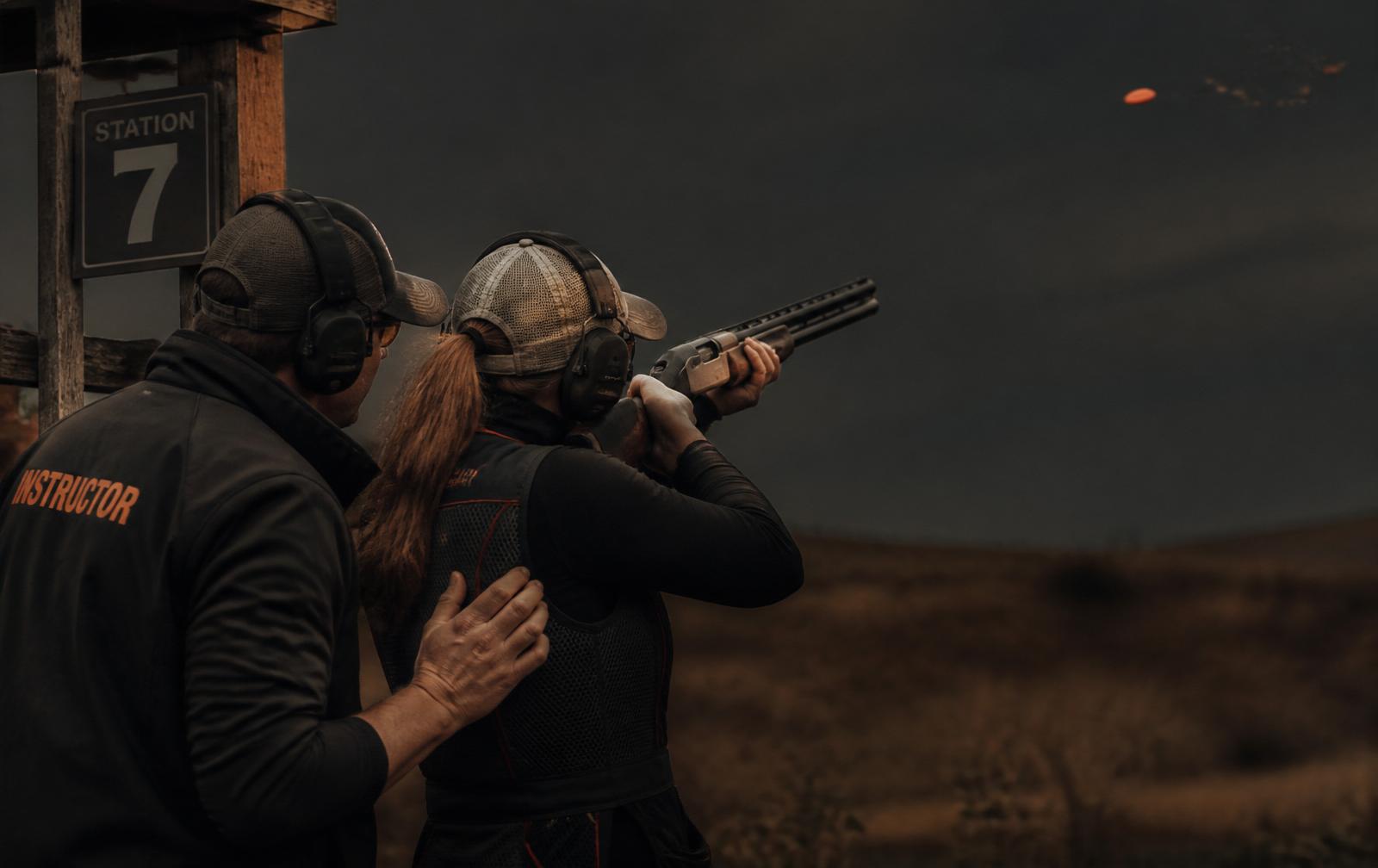
Most of what makes a beginner miss (and most of what makes recoil hurt) is fit and mount. Ben checks your eye dominance, sets your stance and balance, and drills a repeatable mount while the traps stay quiet.
05
Your first breaks
You'll start on a straightforward, predictable target — usually a slow outgoer — and Ben calls the target for you so all you have to do is see it and move. Most first-timers break clays in their first lesson.
06
What to work on next
At the end you'll know what your two or three priorities are, whether it's mount, hold point or visual focus, and roughly how much range time it takes to make them automatic.
What to bring
- Comfortable clothes you can move your arms freely in
- Closed-toe shoes with decent grip — courses can be uneven
- A hat with a brim and sunglasses or clear shooting glasses
- Sunscreen and water, especially in summer
- Your own shotgun and shells if you have them — not required
What you don't need
- A shotgun of your own — you can borrow one
- Any prior shooting experience
- A hunting or shooting license
- Camo, a vest, or any specialized outfit
Instruction is $90 per hour for one to four people. Targets, shells and range fees are paid at the range. See pricing.
Beginner questions, answered
- Do I need my own shotgun to take a lesson?
- No. If you don't own a shotgun, you can borrow one for your lesson — just mention it when you book so Ben brings something suited to your size and build. Plenty of students take several lessons before they buy a gun, which is smart: once you've shot a few, you'll know far better what to spend money on.
- Will the recoil hurt? Will I bruise my shoulder?
- It shouldn't. Beginners get bruised when a gun doesn't fit them, when it's mounted badly, or when someone hands them heavy loads with no instruction. All three are coaching problems, and they're the first things Ben fixes. A properly fitted gun with a suitable load, mounted correctly into the shoulder pocket, is comfortable to shoot for a full lesson.
- How much does a lesson cost, and what's included?
- Instruction is $90 per hour and covers one to four people, so a couple or a small group can split the hour. That's Ben's time and coaching. Targets, shells and any range fees are paid to the range separately, and there are no packages or minimums — book a single hour if you want.
- How long is a first lesson?
- One hour is the standard block and is plenty for a first lesson — it's about as much shooting as a new shooter can absorb before fatigue starts working against you. You can book more time if you'd rather go longer.
- Is there a minimum age?
- There's no set minimum age. What matters is whether a young shooter can safely handle and control a gun that fits them and follow range instructions — Ben will talk it through with you and choose an appropriate gun and load.
- Can I bring my spouse, a friend, or my kids?
- Yes. The hourly rate covers up to four people, so shared lessons are common and often more fun. Rotating shooters also gives everyone a breather and lets you learn from watching each other's targets.
- Which should I start with — sporting clays, skeet or trap?
- Any of them will teach you the fundamentals, and Ben coaches all three plus bird hunting preparation. Skeet and trap are repeatable, which makes them efficient for grooving a mount early on. Sporting clays offers endless variety, which is why most people stay with it. Tell Ben your goal — recreation, tournaments, or getting ready for a bird season — and he'll pick the fit.
- Do I aim a shotgun like a rifle?
- No, and this is the single biggest thing that separates shotgunning from every other kind of shooting. You're shooting a moving target with a spreading pattern, so you look at the target — not the barrel — and let a correct mount put the gun where your eyes already are. No amount of aiming solves a crossing clay.
- How do I know if I'm right- or left-eye dominant?
- Ben tests it in your first lesson — it takes about a minute. It matters because your dominant eye, not your dominant hand, decides where the gun should be mounted. Cross-dominance is common and entirely workable once it's identified, but it will quietly wreck your shooting if nobody checks.
- I'm left-handed. Is that a problem?
- Not at all. Left-handed shooters do very well; it just changes which shoulder the gun goes to and which eye is doing the work. Mention it when you book.
- Am I too old, or not athletic enough, for this?
- Almost certainly not. Clay target shooting is a technique and timing sport rather than a strength or speed sport, and it's one of the few games where a 70-year-old and a 20-year-old compete on genuinely equal terms. Balance and a repeatable mount matter far more than fitness.
- How many lessons before I'm hitting targets consistently?
- Most people break targets in their first hour. Consistency is about ingraining the mount and the visual routine, which comes from practice between lessons more than from lesson volume. A common pattern is a lesson, a few range sessions working on what you were given, then another lesson to check your work and add the next layer.
- Will lessons help my bird hunting, not just clays?
- Yes — it's one of the most common reasons people book. The fundamentals are identical, and clays let you rehearse the presentations you'll actually see in the field on demand rather than twice a season.
- Does gun fit really matter for a beginner?
- It matters most for a beginner. A gun that doesn't fit teaches you to compensate, and those compensations become the habits you later pay someone to remove. Getting fit and mount right at the start is the cheapest shooting lesson there is.
- Where do lessons take place?
- Ben coaches at clubs and ranges around Southern California. When you get in touch, he'll suggest a location that works for where you are and what you want to shoot.
Still have a question?
Call Ben Courtemarche directly, or send a note and tell him where you're starting from. There's no wrong answer.